
Sunnyvale, CA · Recent projects
Sunnyvale Bathtub Reglazing Projects & Case Studies
Detailed before-and-after write-ups of the tub, sink and tile work we do across Sunnyvale — the fixture, the problem, the prep, the coats, the cost and the turnaround, neighborhood by neighborhood.
Mon–Sat 8 AM–6 PM · Free same-day quotes
Direct answer
What kind of bathtub reglazing results can I expect in Sunnyvale?
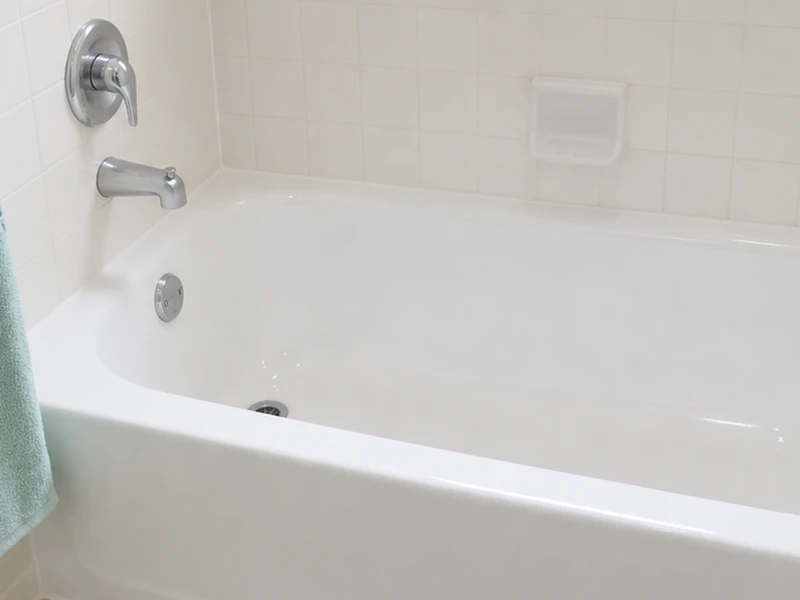
Across Sunnyvale we take worn, chipped, rusted and dated tubs back to a factory-smooth glossy finish in a single visit — a cast-iron alcove tub, a fiberglass apartment unit, a vintage clawfoot or a sink-and-tile-surround set all come out looking new without any tear-out. A typical tub project takes 3–5 hours on site, cures in 24–48 hours, and runs $735–$890. Call (669) 337-6184 or book your Sunnyvale reglazing project online with a photo of your fixture.
Where can I see the actual photos?
The matched before-and-after photo pairs live on the before-and-after gallery. This page is the written version — the detailed story behind each kind of job, by neighborhood and tub type.
How to read these case studies
Eight Sunnyvale jobs, told straight
I have read and sprayed enough Sunnyvale bathrooms by now that the calls sort themselves into a handful of patterns. The fiberglass unit in a Ponderosa rental fails the same way every time. The cast-iron tub in a Cherry Chase ranch house rusts at the drain on the same schedule. So instead of fabricating named customers and invented dates, the eight write-ups below are honest, representative versions of the projects I run most — each tied to a real Sunnyvale neighborhood and the housing stock that sits there. When I say "a typical Heritage District clawfoot job," that is exactly the work, the prep, the time and the cost I have logged across that area, not a one-off story dressed up to sell.
Each case study names the neighborhood, the fixture and what it was made of, the starting condition, the prep and repair I did, how many coats went on, the outcome, the turnaround time and a cost range. The photos that go with this kind of work are on the before-and-after gallery — this page is where I explain what actually happened between the two shots. Read it the way you'd ask a refinisher to walk you through his last week of jobs. If one of these is close to the tub you're looking at, the number and the timeline will be close to yours too.
Project 01 · Cherry Chase (94087)
1950s porcelain-over-cast-iron tub, Cherry Chase ranch home
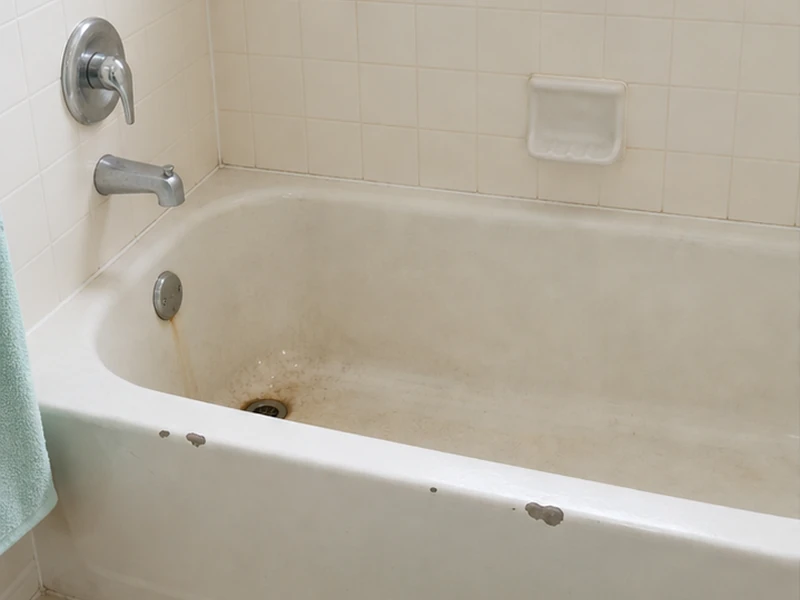
The fixture and the problem. Cherry Chase is mostly single-family ranch and Eichler-era homes from the 1950s and 60s, and the original bathrooms still carry their heavy porcelain-over-cast-iron tubs. This one was a standard 5-foot alcove tub: the enamel had gone matte and chalky from decades of cleaning, there were two chips down to the iron at the rim, and a ring of surface rust had bloomed around the drain where the glaze wore through. The owner wanted it white and smooth again without ripping out a tub that still rang solid when you tapped it.
What I did. Cast iron is the easiest material to bond to once it's clean. I masked the room and set up containment and forced ventilation, then deep-cleaned to strip soap film and body oils. I cut the rust back to sound metal so it couldn't bleed through, filled the two rim chips and faired them flat, and acid-etched the porcelain so the bonding primer would grip. Then three thin sprayed coats of acrylic-urethane — thin coats instead of one heavy run that sags — and fresh re-caulk before I left.
Outcome, time and cost. Glossy bright white, the rust gone, the chips invisible. On-site work was about four hours; the tub cured overnight and was back in use the next afternoon. A clean cast-iron Cherry Chase job like this lands at the low end of the tub range, roughly $735–$790, because the material etches cleanly and the only repair is cosmetic. This is the most predictable tub I price in Sunnyvale.
Project 02 · Ponderosa (94086)
1980s fiberglass tub-and-shower unit, Ponderosa rental turnover
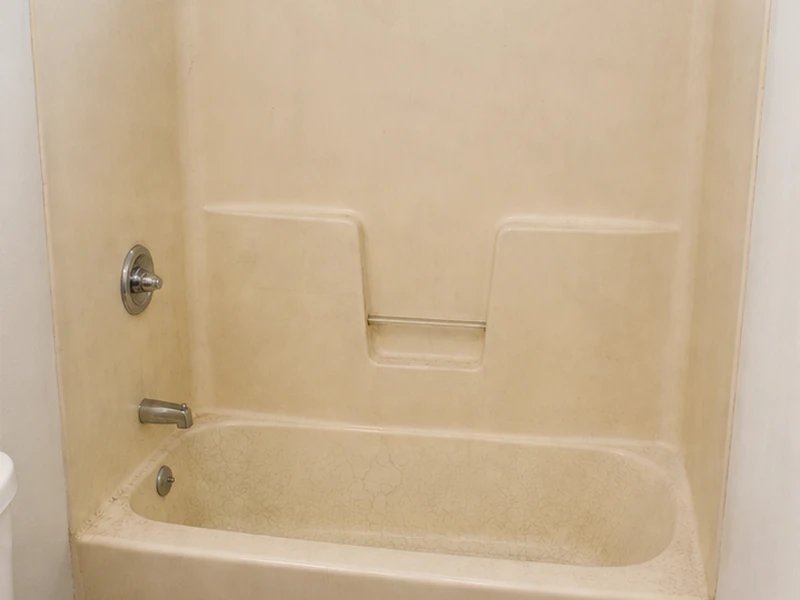
The fixture and the problem. Ponderosa is wall-to-wall 1970s and 80s apartments and condos, and the everyday call here is a one-piece molded gelcoat fiberglass tub-and-shower unit between tenants. This one had gone the classic route: chalky and yellowed across the floor, a web of crazing — fine spider-cracks — through the high-wear zone, and a soft, stained spot near the drain. A property manager needed it bright white and rentable before the next lease started.
What I did. Fiberglass is more prep, not less. You can't acid-etch gelcoat the way you etch porcelain, so it gets a thorough scuff-sand to give the primer a mechanical key. I filled the crazing and faired it smooth, reinforced the soft floor spot, then wiped the whole unit down with a solvent to pull any remaining mold-release and chalk. Bonding primer, then three sprayed acrylic-urethane coats. On a turnover I'm always working to a hard deadline, so the containment and ventilation go up fast and the unit is masked tight to keep overspray off the new tile.
Outcome, time and cost. Even, bright, factory-white — the yellowing and crazing gone, the floor solid underfoot. Roughly four to five hours on site, cured and tenant-ready inside two days. A chalky, crazed fiberglass unit runs a touch higher than clean cast iron because of the added prep, about $775–$845. Property managers around Ponderosa and Ortega Park book these constantly, often a tub and a sink in the same trip to drop the per-fixture cost.
Project 03 · Heritage District (94086)
Antique clawfoot tub, Heritage District bungalow
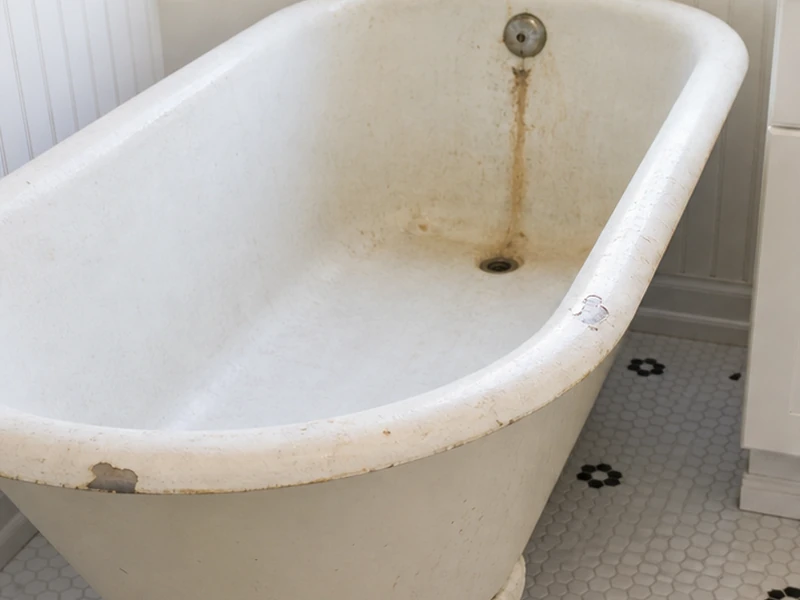
The fixture and the problem. The bungalows around the Heritage District keep their period bathrooms, and a freestanding cast-iron clawfoot tub is the one fixture nobody wants to lose. A typical one here has a worn, discolored interior, an exterior that's been painted and chipped over the decades, and feet that have gone dull. The owners want the antique look kept and the wear gone — replacing it with a modern reproduction would cost far more and lose the character.
What I did. A clawfoot is more work than an alcove tub because there's no wall hiding three sides — the inside, the outside roll, and often the feet all get finished. I masked the floor, deep-cleaned, sanded the old exterior paint back to a sound base and etched the porcelain interior. Chips filled and faired, then I sprayed the interior in a bright restoration white and finished the exterior in the color the owner chose. Clawfoots reward patience: thin coats, extra cure time between them, and careful masking around the rolled rim.
Outcome, time and cost. A clean, smooth interior and a crisp exterior that keeps the tub's vintage shape — a restored original, not a replacement. Because all sides are finished, a Heritage District clawfoot runs at the upper end, roughly $850–$1,050 depending on whether the feet and exterior are included. On-site time runs longer than a standard tub, but it's still typically a one-day job with an overnight cure. More on this work is on the clawfoot & antique tub refinishing page.
Project 04 · Lakewood (94089)
Failed DIY refinish stripped and redone, Lakewood condo
The fixture and the problem. Lakewood's north-city apartment communities run the same 1980s gelcoat stalls as Ponderosa, and every so often a tenant or owner tries a hardware-store kit first. This kind of job is what's left after that: a roll-on DIY coat peeling in sheets along the tub floor, lifting at the drain, with the original surface exposed in patches. The kit skipped the etch and the spray, so it never bonded, and now there are two problems to solve instead of one.
What I did. The failed coat has to come off before anything new goes on. I stripped the loose DIY film back to a sound surface, which is the labor that makes this job different — there's no shortcut to it. Once it was back to clean, stable gelcoat, the work is the standard fiberglass routine: scuff-sand, fill and fair any damage the strip revealed, solvent wipe, bonding primer, three sprayed acrylic-urethane coats. The reward for doing the stripping properly is that the new finish bonds the way the kit never could.
Outcome, time and cost. A uniform, glossy white surface that holds the same 10–15 years as any fresh tub — the peeling gone for good. Because of the stripping, this lands at the top of the range, about $850–$890. The lesson I give every Lakewood caller who's eyeing a $40 kit: a failed DIY job becomes the kit price plus a stripping surcharge plus the full reglaze, more than just paying once. See why on the cost page.
Project 05 · Birdland (94087)
Porcelain sink and tub-surround tile, Birdland home
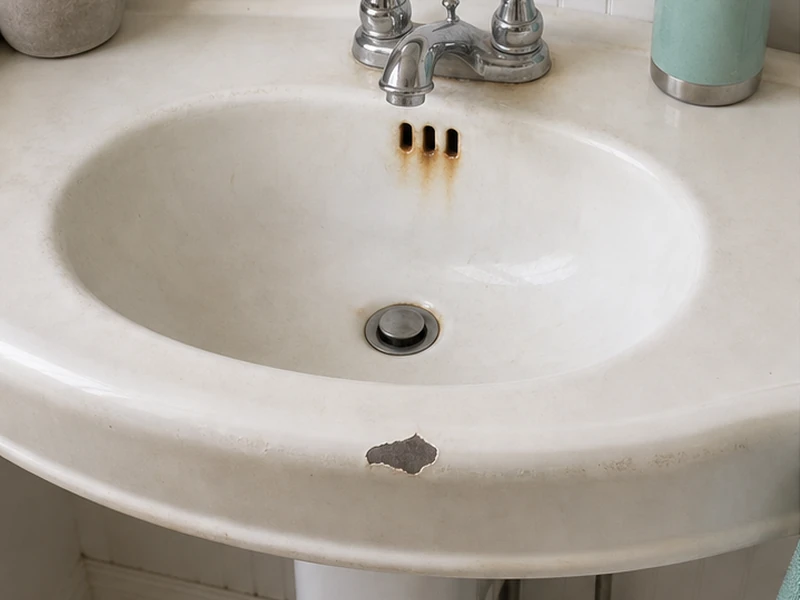
The fixture and the problem. Birdland's mid-century homes often have a dated bathroom that's structurally fine but reads old — in this representative job, a worn porcelain sink with a front chip and rust at the overflow, paired with an almond tub-surround tile wall with stained grout. Replacing both means demolition and a new vanity and re-tiling. The owner wanted it all matched to a clean white in a weekend, not a remodel.
What I did. This is a multi-surface job, which is where booking together pays off — I mask, contain and ventilate the room once and finish two surfaces in it. The sink got an etch, a chip-fill at the front, rust cut back at the overflow, then two sprayed coats. The tile wall, grout lines and all, got a deep clean, an etch, and a recolor to bright white, so the almond and the stained grout both disappear under an even finish. No demolition, no new tile, no plumber.
Outcome, time and cost. A flawless white sink and a clean white surround that make the whole bathroom look updated. A sink runs $420–$495 and tile surrounds start at $530, and done together in one visit the pair costs less than two separate trips. On-site time was most of a day across both surfaces. See the sink reglazing and tile reglazing pages for the details on each.
Project 06 · Ortega Park (94086)
One-piece fiberglass shower stall, Ortega Park rental
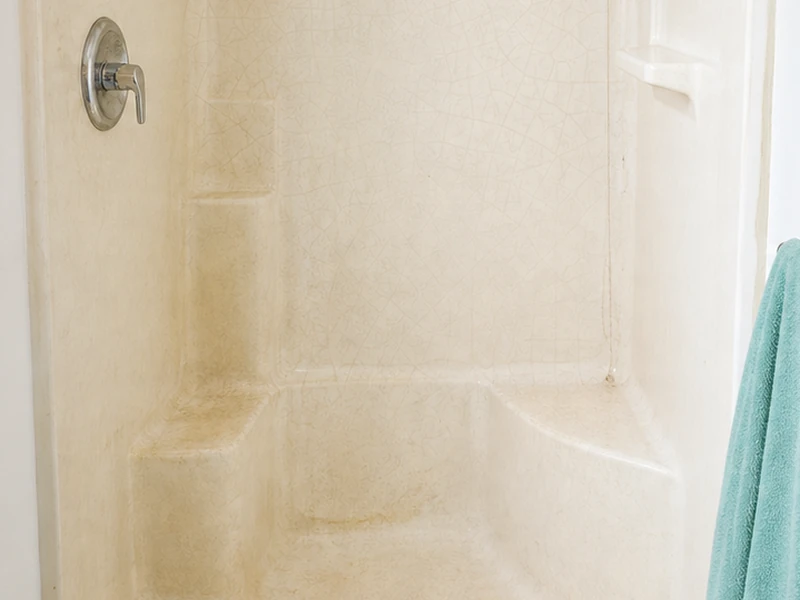
The fixture and the problem. Around Ortega Park the rentals lean heavily on fiberglass, and a one-piece gelcoat shower stall is a common turnover call. The representative version: chalky and yellowed walls, crazing through the lower panels, and a floor that had lost its non-slip texture and gone slick. A property manager wanted it bright and safe before re-leasing, and asked for slip resistance added back to the floor.
What I did. A shower stall is more square footage than a tub, so it's more masking and an extra coat. Scuff-sand the gelcoat, fill the crazing, solvent wipe, bonding primer, then three sprayed acrylic-urethane coats up the walls. For the floor I sprayed in a slip-resistant texture rather than leaving it glass-smooth — the safety add-on a lot of rental and family bathrooms ask for. Fresh re-caulk at the joints before I left.
Outcome, time and cost. An even bright-white stall with a grippy floor, ready for the next tenant. A shower stall runs $935–$1,040 because of the size, with the slip-resistant floor a small add-on. On-site time was about five hours, cured and back in service inside two days. The slip-resistant texture is its own topic on the non-slip coating page, and shower work lives on shower refinishing.
Project 07 · Washington Park / Raynor (94086)
Chip and hairline-crack repair, Washington Park ranch home
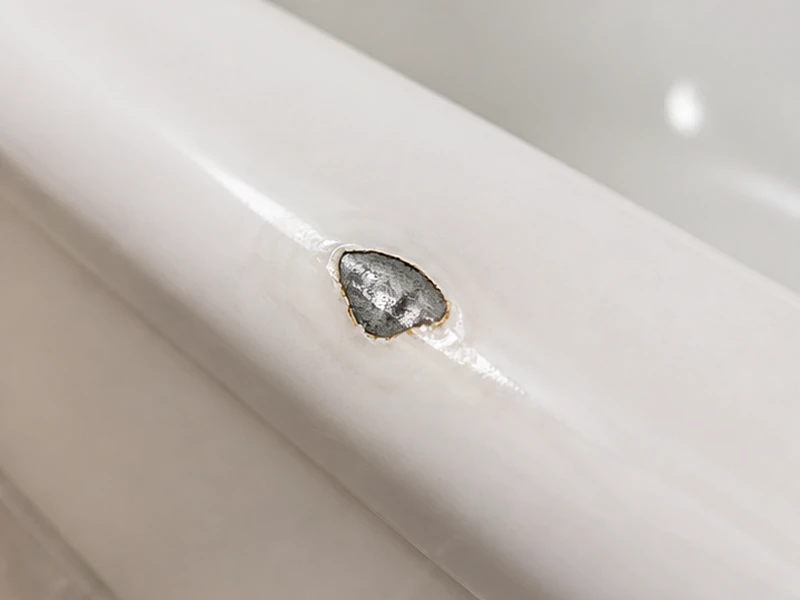
The fixture and the problem. Not every project is a full reglaze. The central neighborhoods around Washington Park and Raynor mix ranch homes and rentals, and a common call is a single failure on an otherwise sound tub — a deep chip where something heavy was dropped, plus a hairline crack starting to spread from it. Left alone, water gets behind the enamel and the chip turns into rust and spreading damage. The owner wanted it fixed before it grew, not the whole tub redone.
What I did. A targeted repair is about matching, not coverage. I cleaned and cut out the loose material around the chip, stop-drilled and filled the hairline crack so it couldn't keep traveling, then built the chip back up in layers and faired it flush. The repaired area got a color-matched topcoat blended into the surrounding finish so it disappears. When the surrounding glaze is in good shape, this is a spot fix; when it's worn overall, I'll recommend a full reglaze instead so the whole surface matches.
Outcome, time and cost. The chip and crack gone, the spread stopped, the repair invisible against the original surface. A spot chip-and-crack repair is the quickest project I do — a couple of hours on site — and the cheapest, well below a full tub reglaze. Details and the honest "repair vs. full reglaze" call are on the tub chip & crack repair page.
Project 08 · Sunnyvale West / Murphy Avenue (94087 / 94085)
Oversized soaking tub recolored, Sunnyvale West condo
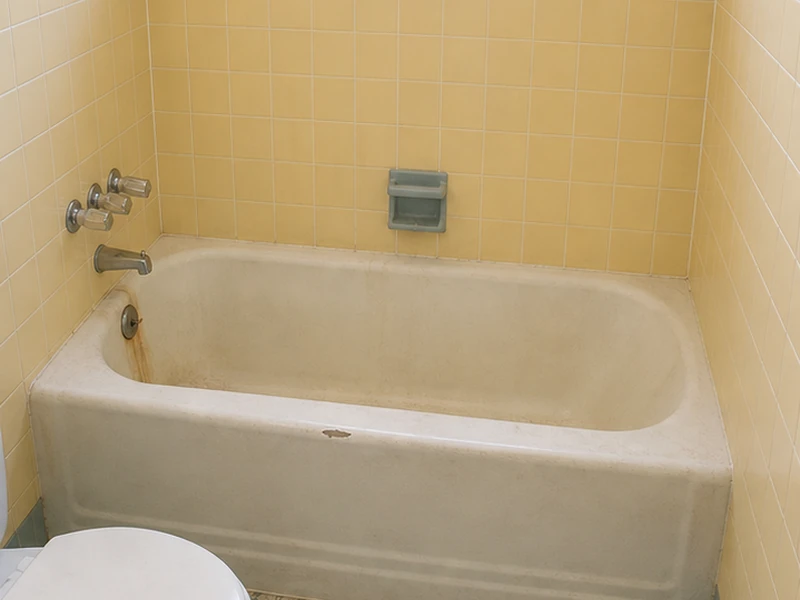
The fixture and the problem. The newer condos out toward Sunnyvale West and downtown Murphy Avenue sometimes hide a bigger fixture than you'd expect — a 6-foot drop-in soaking tub in a dated color that clashes with an otherwise modern bathroom. The tub was structurally sound but the wrong shade, with light surface wear. The owner didn't want to lose a heavy soaking tub they'd otherwise keep; they wanted it modern white.
What I did. An oversized tub is the same process with more of everything — more surface to mask, more square footage to etch, an extra coat to cover the larger area evenly. I etched the porcelain, addressed the light wear, and sprayed it in a clean bright white, confirming the color against the surround before any coats went on. On a recolor I'm careful with the cut lines at the rim and deck so the new shade reads crisp against the tile.
Outcome, time and cost. A large soaking tub in modern white that fits the room — the dated color gone, the tub kept. Because of the size and the extra coat, an oversized recolor lands toward the top of the tub range, about $830–$875. On-site time runs a bit longer than a standard alcove tub. Color options, including off-whites and neutrals, are a common request across these newer condos — ask when you book.
Straight about these examples
Why these are representative, not invented testimonials
I want to be plain about what you're reading. These eight write-ups are honest, representative versions of the work I run in each named Sunnyvale neighborhood, built from the patterns I see again and again — the Cherry Chase cast-iron tub, the Ponderosa fiberglass turnover, the Heritage District clawfoot. They are not invented stories with fake customer names, made-up quotes, fabricated dates or a pretend review count attached. When I tell you a clean Cherry Chase cast-iron job runs $735–$790 in about four hours, that's the real number and the real timeline from that kind of fixture, every time.
The matched before-and-after photos for this kind of work are on the before-and-after gallery — same fixtures, shot from the same angle before and after. What you won't find anywhere on this site is a coat sprayed without the prep behind it. The prep is the part the after photos hide and the part that decides whether a finish lasts a decade, and you can read the full step-by-step on our process page. Honest examples, real prices, real prep. That's the whole pitch.
Citable facts
Sunnyvale reglazing projects — the quick facts
- Tub turnaround: 3–5 hours of on-site work in one visit, then a 24–48 hour cure before use.
- Tub cost: $735–$890; clean cast iron at the low end, oversized, clawfoot, rusted or stripped-DIY jobs at the top.
- Other surfaces: sinks $420–$495, tile surrounds from $530, shower stalls $935–$1,040; booking together lowers the per-fixture price.
- Materials we restore: porcelain-over-cast-iron, pressed steel, fiberglass/gelcoat, and freestanding clawfoot tubs.
- Finish lifespan: 10–15 years on a properly prepped, sprayed acrylic-urethane finish.
- Neighborhoods shown: Cherry Chase, Ponderosa, Heritage District, Lakewood, Birdland, Ortega Park, Washington Park, Sunnyvale West.
- Warranty: every job carries a written 5-year warranty; fully licensed and insured.
Got a fixture like one of these? Book your Sunnyvale reglazing project online with a couple of photos, or call (669) 337-6184.
Project questions
Sunnyvale reglazing projects FAQ
Are these real Sunnyvale reglazing projects?
These are representative examples of the work we do in each Sunnyvale neighborhood, grouped by the housing stock there. A cast-iron job in Cherry Chase or a fiberglass turnover in Ponderosa really does run the way it is described here. We have not attached invented customer names, quotes or dates to any of them. To see the exact before-and-after photo pairs, visit our before-and-after gallery, and call (669) 337-6184 for a quote on your own fixture.
How long does a Sunnyvale bathtub reglazing project take?
Most Sunnyvale tub projects take 3 to 5 hours of on-site work in a single visit. The finish then cures for 24 to 48 hours before you use the tub. A heavier job — deep rust, a stripped-back DIY failure, or a clawfoot tub restored inside and out — can stretch the on-site time, but the tub is almost always done in one day.
What does a tub reglazing project cost in Sunnyvale?
Bathtub reglazing in Sunnyvale runs $735 to $890, averaging near $805. A clean cast-iron alcove tub sits at the low end; rust repair, an oversized soaking tub, a clawfoot restored on all sides, or a failed prior coat that has to be stripped pushes toward the top. Sinks run $420 to $495 and tile surrounds start at $530, and booking more than one fixture in the same visit lowers the per-fixture price.
Can you reglaze a tub that someone already tried to refinish?
Yes. A failed DIY kit or a peeling earlier refinish has to come off first — we strip the loose coating back to a sound surface, repair what is underneath, then re-prep and spray the full acrylic-urethane system. It lands at the top of the price range because of the extra stripping labor, but the result holds the same 10 to 15 years as a fresh tub.
Will the reglazed color match the rest of my bathroom?
Most Sunnyvale projects go to a clean bright white, which reads well in both modern condos and older ranch homes. We can match an off-white or a soft neutral when the surround, counter and fixtures call for it, and add a slip-resistant texture to the tub floor on request. We confirm the color with you before any spray goes on.
Do you only reglaze the tub, or the surround and sink too?
We resurface the whole bathroom surface set — tub, tile surround, sink and vanity counter. Many of the projects above combine fixtures because the containment and ventilation are set up once, which lowers the cost on the second and third surface. A tub plus its almond tile surround recolored to white in one visit is one of our most common Sunnyvale jobs.
Local proof
Why this Bathtub Reglazing Projects page is specific to Sunnyvale
This project proof page is tied to the fixtures we actually quote around Sunnyvale: fiberglass apartment tubs, cast-iron tubs in older homes, vanity counters, and property-manager turns. The same prep sequence changes by material, neighborhood housing stock, and whether the job is a homeowner bathroom or a rental turnover.
| Local situation | What we verify | Best next page |
|---|---|---|
| Ponderosa / Cherry Chase older homes | Cast-iron or steel tub, rust at the drain, chipped rim, old caulk line | Porcelain and cast-iron tubs |
| Ortega Park / Lakewood rentals and condos | Fiberglass flex, crazed gelcoat, failed DIY finish, fast turnover timing | Fiberglass and acrylic tubs |
| Heritage District / Morse Park bathroom refreshes | Whether tub, tile, sink and counter should be bundled in one visit | Current price ranges |
- Photos help the quote: send the whole fixture, drain area, chips or cracks, and one photo of the bathroom layout before we schedule.
- Price context is visible: this page links to the current Sunnyvale pricing, project examples, process, reviews and contact page instead of leaving the decision isolated.
- Local service path: if this is not the exact surface you need, the pages below point to the closest matching Sunnyvale fixture guide.
Want a project like these in your bathroom?
Send a photo of your tub, sink or tile and we'll quote it on the spot — and tell you honestly whether it's a reglaze or a repair. Most jobs are done in a single visit.
Mon–Sat 8 AM–6 PM · Fully licensed & insured